|
|
The Last Page.
The last page, first.
|
|
Trump Tells Data Centers to Make Their Own Power
The President says electric bills could even fall. The people who run the grid are less sure, and their next price auction closes in December.
|
|
Before the story: Trump wants data centers to bring their own power. In March, Bernie Sanders proposed a nationwide pause on new ones. Porter Stansberry of Porter & Co., an investment research firm, argues the two men agree on something bigger:
|
|
The story
On Wednesday, President Trump posted about data centers on Truth Social. The big new ones, he wrote, are “mandated by me to make their own electricity.” Any extra power should go back to “the local community, or grid.”
He also urged the companies to pay nearby towns a “dividend.” And on prices: “In fact, there could be a substantial decrease.” Senate Majority Leader John Thune made the same case in September. “They ought to be able to take care of their own utilities, their own power,” he said.
This story ends on your electric bill. Government forecasters expect the average home to pay 18.2 cents a kilowatt-hour this year, up about 5% from 17.3 cents in 2025. Next year, they expect 18.7 cents.
The people who run the grid sound less hopeful. PJM runs the country’s largest power grid, covering all or part of 13 states and Washington, D.C. They include Pennsylvania, Ohio, Virginia, Maryland, New Jersey and Illinois. If you live elsewhere, the national forecast above is your number.
PJM pays power plants to stay ready for the hottest and coldest days. It sets that price at an auction, called the capacity auction. Your utility passes the cost on to you. When the price first jumped in 2025, New Jersey officials said typical bills there would rise more than $20 a month.
PJM’s independent watchdog, called the market monitor, says data center demand added $29.4 billion to the last four auctions. It calls that increase “irreversible.” On Oct. 9, federal regulators voted 5-0 against most of PJM’s plan to make new data centers bring their own power. Much of it, they said, was a job for the states.
Trump says the data centers will pay. The auction results say you already are.
|
|
$28.92
What PJM paid power plants to stand ready in 2024-25, per megawatt per day
|
$325
July’s price, the most the rules allowed, for the third auction in a row
|
11 times
July’s price compared with 2024-25
|
|
|
Price cap
|
The most PJM’s auction is allowed to pay. Governors of PJM’s states pushed for the limit, and the exact figure shifts a little from one auction to the next.
|
|
|
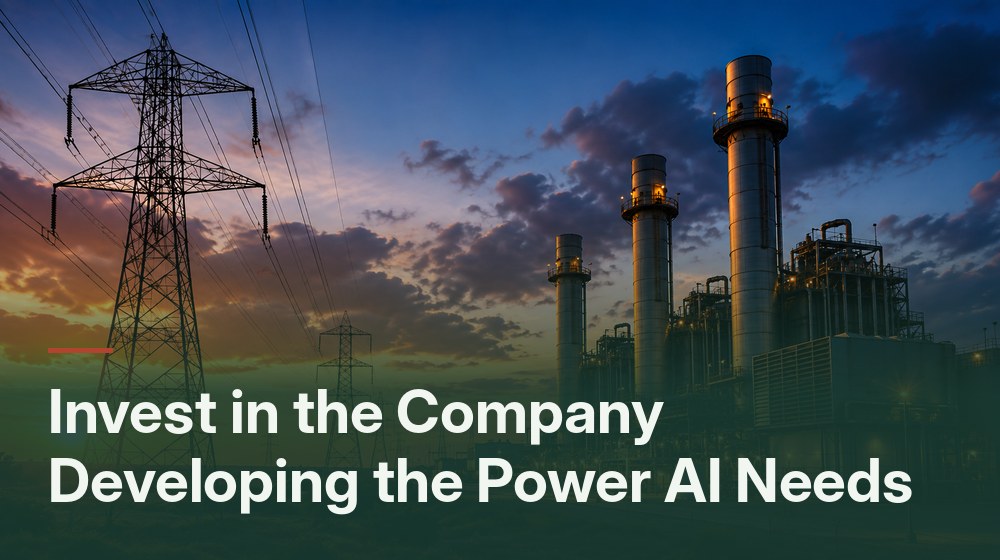
Every rise in that price is a bill for households and income for whoever owns the power plants. One Texas company develops plants for data centers and sells shares to the public:
|
Choosing the AI winner is a difficult bet. Every contender needs data centers with reliable electricity, so a power developer can sell to any of them.
Either way, the company could grow in value. You can become a shareholder from $1,000.
Securities are being offered pursuant to Regulation Crowdfunding through DealMaker Securities LLC. Please review the offering materials, including the Form C, before investing at invest.americanpowergen.com.
|
|
|
If data centers build their own
Our best-case projection: June 2029
|
If no rule follows
Our worst-case projection: June 2029
|
|
|
Best case
JUNE 2029. The December 2026 auction finally came in under the cap. Utilities had cut from their forecasts the data centers that were never likely to be built. Exelon had already cut its list of likely projects by nearly 40% in 2026.
Then the builders did what Trump’s post asked. Oracle ran its AI campuses on its own fuel cells. Other tech giants paid for new plants and sold the spare power back.
The lower price starts reaching bills this month, and the supply charge on yours stops climbing. A few towns with server farms even collect the “dividend” Trump asked for. The AI building kept going, so the tech stocks in your retirement account held their gains.
|
|
Worst case
|
JUNE 2029. No rule ever followed the post. Federal regulators had handed the fight to the states in October 2026, and the states moved slowly. The server farms kept plugging into the same grid you use.
December’s auction hit the cap for a fourth straight time. PJM’s chief executive had warned that only “substantial load reduction” would prevent that. Load means demand, and demand kept growing.
Now that price is reaching bills. Your utility asks for another increase, and the supply charge on your statement is the largest it has ever been. The payments went to a few towns with server farms. Everyone else on the grid got the invoice.
|
|
|
How it ends
On the PJM grid, you get the maximum standby price through May 2030, unless December’s auction comes in under the cap.
The reason is the calendar. PJM sets this price years ahead, and three auctions in a row already set it at the cap through May 2029. That cost is locked in. December’s auction sets the year after that, June 2029 through May 2030.
No order can build a power plant by December. PJM’s chief executive, David Mills, wrote in September that getting a price below the cap would take “substantial load reduction.” In plain English: fewer data centers.
Unless the builders bring their own plants fast, the AI boom sends your household a bill either way. If the building keeps going, you pay on your electric bill. If it cools, the auction can ease, and you pay through your retirement savings instead. Thursday showed what that looks like, when worries about AI spending knocked the Nasdaq down 2.6%.
Trump’s idea can still matter later. Regulators told the states to write these rules. A state law can make data centers pay for new plants from day one. On its own, a post requires nothing. A state law would.
|
|
|
PJM’s next capacity auction closes Dec. 15, and the results are due Dec. 22. This time the cap is $337.83 per megawatt per day, a little higher than July’s. If the price lands on the cap again, Trump’s plan has not reached your bill.
|
|
|
Before you go
|
|
If you would rather own part of the power supply than only pay for it:
|
|
Tesla said on Wednesday it is trying to get its driverless Cybercab to customers by year’s end. Brownstone Research, an investment research firm, has a look inside:
|
|
The Last Page finishes one big story every weekday. If you no longer want it, the button below takes you off the list.
|
|
The Last Page.
The last page, first. Reply and name the story you want finished.
|
|
American PowerGen: Securities are being offered pursuant to Regulation Crowdfunding through DealMaker Securities LLC. Please review the offering materials, including the Form C, before investing at invest.americanpowergen.com.
|
|
|